

When the federal government charges someone in central Alabama, the case lands in the United States District Court for the Middle District of Alabama — a Montgomery-based court that has hosted some of the most closely watched public-corruption prosecutions in the state’s history. Federal practice runs on its own procedural rules, its own sentencing system, and its own deadlines, and none of them forgives inexperience.
This guide walks through how federal cases actually move in this district — the three courthouses, the small and long-tenured bench, the U.S. Attorney’s Office, the public-corruption legacy, and a trial rate well above the national norm. Elizabeth Franklin-Best, P.C. defends federal criminal cases, appeals, and post-conviction matters nationwide, and our principal attorney, Elizabeth Franklin-Best, has been admitted pro hac vice in the Middle District of Alabama. Her federal record spans more than 330 proceedings — over 100 of them appeals — across all twelve federal circuits and the U.S. Supreme Court. This page belongs to our federal courts directory.
A federal investigation in Montgomery, Dothan, or Opelika rarely waits for its subject to get organized. We offer a paid, one-hour initial consultation to take stock of the case and chart the next moves.
Table of Contents
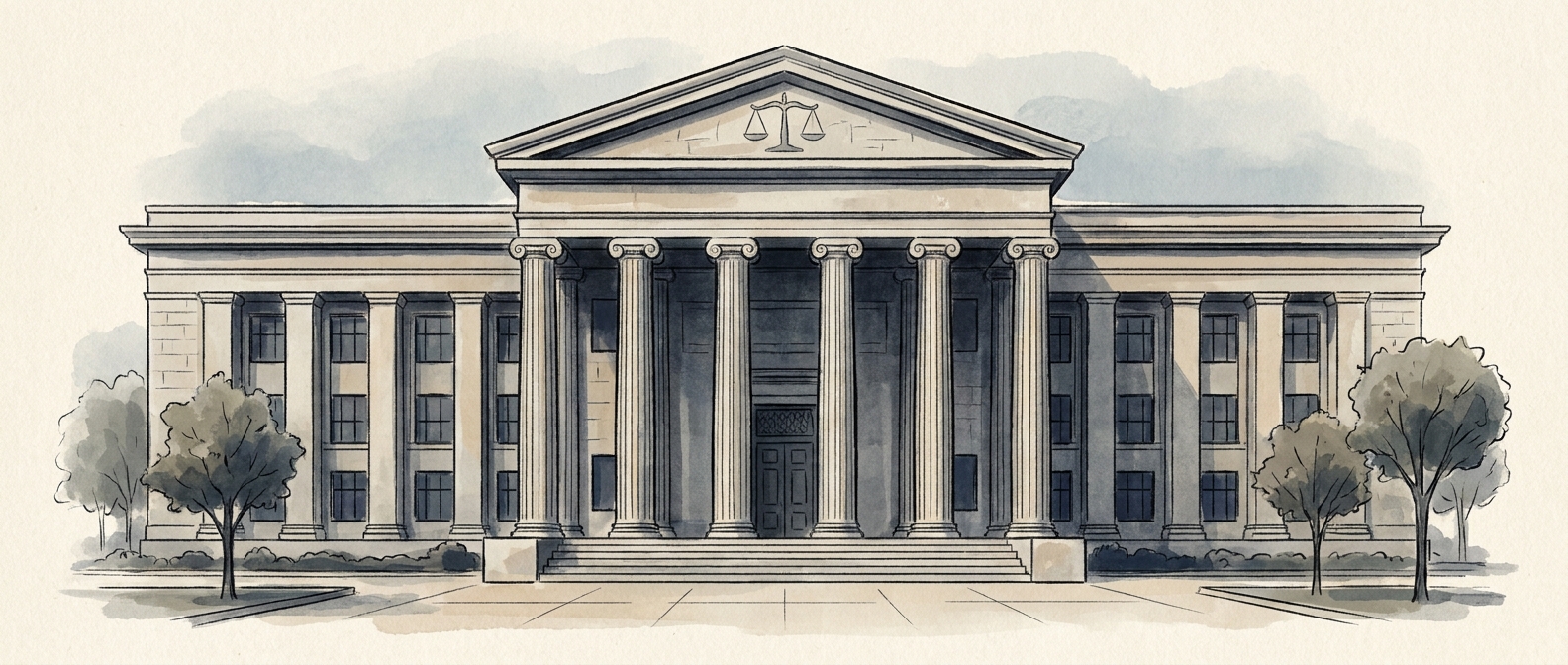
Quick Answer: Middle District of Alabama
| Question | Answer |
|---|---|
| Which counties fall within this district? | Twenty-three central Alabama counties in three divisions — Northern (court at Montgomery), Southern (Dothan), and Eastern (Opelika). |
| Who leads the prosecution here? | The U.S. Attorney’s Office for the Middle District of Alabama; Thomas R. Govan Jr. was sworn in as the Senate-confirmed U.S. Attorney on May 29, 2026. |
| Which appellate court sits above this district? | The Eleventh Circuit in Atlanta — the court that decided the Siegelman appeals — reviews every conviction entered here. |
| What about challenges after sentencing? | Motions under 28 U.S.C. § 2255 and compassionate-release requests are decided in this district, by the sentencing court itself. |
| Has the firm appeared in this court? | Yes. Elizabeth Franklin-Best has been admitted pro hac vice in the Middle District of Alabama — in-court experience, not just eligibility. |
Key Takeaways
- The Middle District of Alabama serves twenty-three central Alabama counties from courthouses in Montgomery, Dothan, and Opelika — here, the statute and the court’s own locations list match exactly.
- Congress authorizes three district judgeships under 28 U.S.C. § 133; as of mid-2026, Chief Judge R. Austin Huffaker, Jr. leads a bench that also includes some of the longest-serving judges in the circuit.
- Thomas R. Govan Jr. became the district’s Senate-confirmed U.S. Attorney on May 29, 2026.
- Montgomery is a historic public-corruption venue — the federal bribery prosecution of a former Alabama governor, affirmed in its core counts in United States v. Siegelman, was tried here.
- Defendants in this district went to trial in 7.0 percent of FY2024 sentenced cases, two and a half times the 2.8 percent national rate.
- Drug trafficking (36.0 percent) and firearms (32.7 percent) dominated FY2024 sentencings, with fraud at 12.9 percent.
- Compassionate release fared comparatively well here in FY2025: six of twenty-two decided motions were granted, a 27.3 percent rate nearly double the national figure.
- Elizabeth Franklin-Best has been admitted pro hac vice in this court, and we treat its fourteen-day appeal deadline as part of the sentencing-day plan.
The Middle District of Alabama at a Glance
Alabama’s capital district occupies the state’s middle band — twenty-three counties reaching from the Georgia line to the Wiregrass — which 28 U.S.C. § 81(b) divides into a Northern Division seated at Montgomery, a Southern Division at Dothan, and an Eastern Division at Opelika. Unusually among federal districts, the statute and the court’s working reality align perfectly: three divisions, three staffed courthouses, no phantom seats left over from an earlier era.
Montgomery’s role as the seat of state government gives this docket a flavor its neighbors lack. Where official power concentrates, federal corruption jurisdiction follows, and this district has tried cases against figures up to and including a former governor. Day to day, though, most of the calendar looks more ordinary: drug-trafficking conspiracies, firearms prosecutions, and a steady run of fraud cases brought by the United States Attorney’s Office for the Middle District of Alabama.
Above the district sits the Eleventh Circuit, which also reviews judgments from the Northern and Southern Districts of Alabama. Inside the trial court, the district’s local rules — including Local Rule 83.1, which controls who may practice here — and its standing orders supply the procedural ground rules that the Federal Rules of Criminal Procedure leave to each court.
The Bench in Montgomery: Three Judgeships, Long Tenures
28 U.S.C. § 133 allots this district three judgeships — one of the smallest complements in the Eleventh Circuit. As of mid-2026, the court’s own roster is led by Chief Judge R. Austin Huffaker, Jr., alongside District Judges Emily C. Marks and Bill Lewis. The roster also lists Judges Myron H. Thompson, W. Harold Albritton III, and W. Keith Watkins — judges whose service stretches back decades. Judge Thompson served as the court’s chief judge from 1991 to 1998, and Judges Albritton and Watkins each led the court before taking senior status, in 2004 and 2019 respectively, according to the court’s published biographies.
Four magistrate judges — Chief Magistrate Judge Stephen M. Doyle and Magistrate Judges Jerusha T. Adams, Kelly Fitzgerald Pate, and Chad W. Bryan — handle initial appearances, detention hearings, and much of the pretrial machinery that determines whether a client awaits trial at home or in custody.
A bench this compact has practical consequences. With three active district judges, the universe of possible sentencing philosophies in any given case is small and knowable, and patterns recur. Studying the assigned judge’s practices — on variances, on acceptance disputes, on supervised-release conditions — is a meaningful fraction of case strategy here, and it is work we do at intake rather than on the eve of sentencing.
Federal Criminal Cases in the District
From white-collar investigations and fraud prosecutions to drug conspiracies, firearms charges, and corruption cases, this district charges across the entire federal code. The road a case travels, however, is broadly predictable.
An investigation often runs quietly for months before its subject learns of it through a target letter, a grand jury subpoena, or agents at the door. A grand jury indictment opens the court case; the initial appearance and arraignment fix release conditions; and the contested middle — discovery, suppression practice, motions to dismiss — builds the leverage each side carries into plea negotiations or trial. Any conviction ends in sentencing under the Guidelines. Stage-by-stage detail is collected in our federal criminal process hub.
Our work runs on two tracks at once: contesting the government’s proof in the district court today, and preserving the objections and record that an Eleventh Circuit panel — or a § 2255 court years from now — will need tomorrow. In this district more than most, that dual-track discipline matters, because cases here actually reach verdicts.
Applied Insight: Nineteen of the 272 defendants sentenced in this district in FY2024 — 7.0 percent — went through trial first, against a national rate of 2.8 percent. A credible, prepared trial posture is not optional in the Middle District of Alabama; it is also the single best lever for producing a fair plea offer.
Public Corruption and Today’s Fraud Docket
Montgomery is where one of the nation’s most closely watched corruption prosecutions unfolded. In 2006, a Middle District of Alabama jury convicted a former governor of Alabama and a health-care-company chief executive of federal funds bribery and honest-services fraud. After the Supreme Court’s decision in Skilling v. United States confined honest-services fraud to bribery and kickback schemes, the Eleventh Circuit in United States v. Siegelman, 640 F.3d 1159 (11th Cir. 2011), affirmed the core bribery counts while reversing convictions the evidence could not sustain. The decision remains the circuit’s touchstone on one of the hardest questions in corruption law — when a campaign contribution crosses into bribery. Its answer: the quid pro quo agreement must be explicit, but it need not be express, written, or witnessed.
The Supreme Court has kept trimming these statutes since. McDonnell v. United States narrowed what counts as an “official act,” and Snyder v. United States, 603 U.S. 1 (2024), held that 18 U.S.C. § 666 criminalizes bribes but not after-the-fact gratuities to state and local officials. For anyone drawn into a state-government-adjacent investigation in this district, those limits are working defense tools, not trivia.
The current docket skews toward fraud of a more street-level kind. The U.S. Attorney’s Office’s announced cases through 2025 and 2026 feature a multi-state mail-and-bank-fraud conspiracy built on stolen mail and washed checks, working through Montgomery sentencings defendant by defendant, alongside Medicaid-provider fraud and money-laundering matters. Since May 29, 2026, the office has been led by Senate-confirmed United States Attorney Thomas R. Govan Jr., who previously prosecuted federal cases in this district.
Trials, Guideline Sentences, and Compassionate Release
The Sentencing Commission’s FY2024 packet for the district counts 272 sentenced individuals: drug trafficking led at 36.0 percent, firearms followed closely at 32.7 percent, and fraud, theft, or embezzlement ran 12.9 percent. The headline number, though, is the trial rate — 7.0 percent of sentenced defendants here were convicted at trial, two and a half times the national share.
Sentencing practice tilts flexible. Judges imposed within-range sentences in 42.6 percent of FY2024 cases, below the 45.7 percent national rate, and granted substantial-assistance departures under U.S.S.G. § 5K1.1 in 16.2 percent — among the heavier cooperation rates anywhere, against a 9.9 percent national figure. Cooperation is a real currency in this district, and deciding whether to spend it deserves the same rigor as any trial decision; we counsel clients on its costs as candidly as its benefits.
The district also runs a comparatively active compassionate-release docket: its judges decided twenty-two motions under 18 U.S.C. § 3582(c)(1)(A) in FY2025 and granted six — 27.3 percent, versus 16.8 percent circuit-wide and 14.1 percent nationally. The governing framework matured the hard way in this circuit, from the Eleventh Circuit’s 2021 decision in United States v. Bryant treating the old policy statement as binding, through the Sentencing Commission’s 2023 amendment covering defendant-filed motions, to the Supreme Court’s 2026 ruling in Rutherford v. United States that nonretroactive changes in sentencing law are not extraordinary and compelling reasons. We brief compassionate release motions with that whole arc in view.
Appeals and Post-Conviction Matters
In a district that still tries cases at this rate, the appellate questions begin long before judgment: which objections were preserved, and under what standard of review the Eleventh Circuit will examine them. The mechanics are strict — Federal Rule of Appellate Procedure 4(b) gives fourteen days from entry of judgment to file the notice of appeal, a window that closes whether or not anyone was watching it. Our federal appeals practice handles Eleventh Circuit briefing and argument from this district regularly.
When direct appeal ends, collateral review begins in the same Montgomery courthouse: motions under 28 U.S.C. § 2255 — ineffective assistance, constitutional error, jurisdictional defects — are filed in the district of conviction and usually land before the original sentencing judge. That work, along with the compassionate-release litigation described above, sits at the center of our federal post-conviction practice, and because the law is federal, it travels to Montgomery as readily as anywhere else.
Our Pro Hac Vice Experience in This Court
Elizabeth Franklin-Best has been admitted pro hac vice in the United States District Court for the Middle District of Alabama — an admission this court has already granted, not merely one we are eligible to seek. Under the district’s Local Rule 83.1, pro hac vice admission runs on an e-filed motion supported by a certificate of good standing from another United States district court and a per-case fee; it is a process we have completed here before.
Those mechanics are worth knowing because they differ court to court. This district, for example, will admit an attorney to its general bar on a certificate of good standing from another federal district court without a swearing-in appearance — a courtesy many districts do not extend. Mastering each court’s small procedural machinery is the unglamorous half of practicing federal criminal defense nationwide; the other half is the substantive work this page describes.
On substance, our credentials center on exactly what a Middle District corruption or fraud case tends to demand: Elizabeth Franklin-Best is named in Best Lawyers in America 2026 as a “Best Lawyer” in Appellate Practice and is ranked by Chambers USA 2026 for Litigation: White-Collar Crime & Government Investigations. She is admitted to the U.S. Supreme Court and all twelve federal circuits and is the author of Reversing Your Criminal Conviction. Behind those credentials is volume: a nationwide practice of more than 330 federal proceedings and over 100 appeals, with a post-conviction bench that reaches from motions under 28 U.S.C. § 2255 and capital and non-capital habeas to First Step Act § 404 resentencings, Amendment 821 reductions, and compassionate release. In this district she represents clients at trial, on appeal, and in that post-conviction work alike.
Frequently Asked Questions
What area does the Middle District of Alabama serve?
Twenty-three counties across central Alabama, including the Montgomery capital region, the Wiregrass around Dothan, and the Auburn–Opelika corridor. Court sits in Montgomery, Dothan, and Opelika — one courthouse for each of the district’s three statutory divisions.
Who prosecutes federal cases in Montgomery?
The U.S. Attorney’s Office for the Middle District of Alabama. Thomas R. Govan Jr. was sworn in as the district’s United States Attorney on May 29, 2026, following nomination by the President and confirmation by the Senate.
Where do appeals from the Middle District of Alabama go?
To the U.S. Court of Appeals for the Eleventh Circuit in Atlanta, which hears appeals from all three Alabama districts as well as Florida and Georgia. The criminal notice of appeal is generally due fourteen days after entry of judgment.
Is the Middle District of Alabama more trial-prone than other federal courts?
Comparatively, yes. In FY2024, 7.0 percent of sentenced defendants in the district had gone to trial — two and a half times the 2.8 percent national rate. Most cases still end in guilty pleas, but trials happen here often enough to shape how both sides negotiate.
Has the firm appeared in the Middle District of Alabama?
Yes. Elizabeth Franklin-Best has been admitted pro hac vice in the U.S. District Court for the Middle District of Alabama — an admission this specific court has granted before, which reflects in-court experience here rather than just the ability to seek it.
Does the firm handle appeals and post-conviction cases from this district?
Yes. We handle direct appeals to the Eleventh Circuit, motions under 28 U.S.C. § 2255 — which are filed back in the Middle District itself, usually before the original sentencing judge — and compassionate-release motions in the district.
What was the Siegelman case?
A Middle District of Alabama jury convicted a former Alabama governor and a health-care-company executive of federal funds bribery and honest-services fraud in 2006. On appeal, the Eleventh Circuit affirmed the central bribery counts while reversing others, holding that a campaign contribution becomes a bribe only where there is an explicit — though not necessarily express — quid pro quo agreement.
How often is compassionate release granted in the Middle District of Alabama?
More often than the national average recently. In fiscal year 2025 the district decided twenty-two compassionate-release motions and granted six — 27.3 percent, compared with 16.8 percent across the Eleventh Circuit and 14.1 percent nationwide. Every case still turns on its own extraordinary-and-compelling showing.
Which judges sit in the Middle District of Alabama?
As of mid-2026, Chief Judge R. Austin Huffaker, Jr. leads the court, joined by District Judges Emily C. Marks and Bill Lewis, with long-serving Judges Myron H. Thompson, W. Harold Albritton III, and W. Keith Watkins also on the roster. Four magistrate judges, led by Chief Magistrate Judge Stephen M. Doyle, handle pretrial matters.
Is a campaign contribution a bribe under federal law?
Not by itself. A contribution becomes federal bribery only when it is exchanged for an official act under an agreement that is explicit — though, as the Eleventh Circuit held in the Siegelman case, the agreement need not be written, express, or spoken aloud. That line between ordinary political fundraising and a corrupt quid pro quo is the central battleground in Middle District of Alabama corruption cases, and it is decided on the specific proof of intent.
How does cooperation affect a federal sentence in the Middle District of Alabama?
Substantial assistance to the government can earn a motion under U.S.S.G. § 5K1.1 that lets the judge sentence below the guideline range, and this district grants those motions comparatively often — 16.2 percent of FY2024 cases, against a 9.9 percent national rate. Cooperation carries real risks and is not right for every case, so the decision deserves the same rigor as any trial choice. We counsel clients on the costs as candidly as the benefits.
Talk With a Federal Criminal Defense Lawyer
Federal deadlines in this district do not bend: fourteen days to notice an appeal, one year for most § 2255 motions, and investigative windows that close before charges are ever filed. If your matter sits in Montgomery, Dothan, or Opelika — at any stage, from grand jury subpoena to post-conviction — we offer a paid, one-hour initial consultation to put the timeline and the realistic options in front of you.
Send Us the Details
Prefer to write rather than book a time? Tell us about the case below and a member of our team will follow up. If you are writing on behalf of someone who is incarcerated, include their name and BOP register number so we can identify the case.